




The global situation is unpredictable. Sustainable Energy First’s energy analysts explain why we expect UK energy price rises in the medium term.
The Middle East conflict has caused dramatic changes in international energy markets. February was going calmly until the attack on Iran at the end of the month threw everything into turmoil. Wholesale prices have shot up for gas and electricity, while crude oil has been extremely volatile, at one point hitting a four-year high.
Energy prices are a key driver of inflation, which is why we are already seeing prices rising across the board. The Prime Minister has warned that “the longer this goes on, the more likely the potential for an impact on our economy, impact into the lives and households of everybody and every business.” We’ve written a guide to reducing the effect on your business.
The calm…and then the storm
February 2026 | March 2026 so far |
|
|
Strait of Hormuz still throttling global oil and LNG supplies
Normally, millions of barrels of oil are transported every day through the Strait of Hormuz, a narrow shipping route between Oman and Iran. It is the Gulf states’ only access to the open sea. This maritime chokepoint normally handles:
- Nearly 20% of the world’s oil exports
- 20% of the world’s natural gas supply
- Around 30% of global fertiliser exports
Most commercial ships have been avoiding the channel since Iran began attacking vessels in the area in early March. This means longer journeys, supply worries and increased freight costs.
Iran conflict and UK gas
The good news for businesses in gas-intensive industries: it is unlikely that gas supply to the UK will be disrupted. As the government factsheet on the conflict explains, only a small percentage of UK gas comes from the Gulf.
The bad news: UK gas prices are already affected. We are a net importer and are therefore exposed to global gas prices, which are influenced by geopolitics and the crude oil price. We get our gas from a mix of sources, mostly the North Sea, Norway and Continental Europe. At this time of year we’re using imported LNG (liquefied natural gas) to refill the storage used up over the winter. The bottleneck in the Strait of Hormuz has disrupted the global supply of LNG and pushed up prices everywhere, making it more difficult and expensive for the UK to stock up.
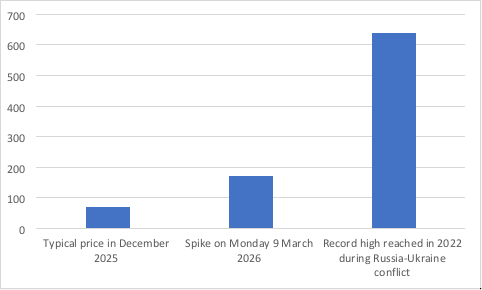
At one point the UK wholesale gas market hit 171p a therm, but prices have thankfully dropped since then. We’re comparatively more vulnerable to elevated gas prices because we’re still a highly gas-dependent nation compared to most other countries in Europe.
UK gas prices in context
The graph shows prices (pence per therm) on the UK gas futures market at different points in recent years. As you can see, the recent spike was concerning and well above normal levels, but came nowhere near the highs reached when Russia invaded Ukraine.

Will the Middle East conflict push up UK petrol prices?
Yes. The disruption to crude oil supplies has already increased the price of petrol and diesel in the UK.
Oil market analysts use Brent crude as their main benchmark, because it’s the most commonly traded type of oil. Since the United States and Israel joined forces to attack Iran in February, the price of Brent crude has surged. It has now come down from the earlier spike of nearly $120 a barrel, but it’s still high and RAC Fuel Watch predicts further rises to UK petrol prices. (There’s usually a bit of a lag before a change in the price of crude oil affects what we pay at the pump.)
UK petrol and diesel prices always fluctuate, but the high prices we’re seeing are definitely a result of the Iran conflict. As we explain in our guide on protecting your business from the effects of the conflict, electrifying your company fleet is one way to reduce your vulnerability to unexpected change in petrol prices.
Will the Iran conflict increase UK electricity prices?
Yes, wholesale electricity prices in the UK have already gone up as a result of what’s happening in the Middle East. Electricity prices are closely linked to gas because a significant portion of the UK’s electricity is generated from gas-fired power stations.
If you are on a flexible contract, you will already be exposed to these higher prices. If your business is on a fixed-price contract then you’ll be shielded from the rises for now, but the market may look very different when it’s time to renew, depending on the timing of your renewal and geo-political developments in the Middle East.
In either case, it’s important not to panic or make knee-jerk decisions. The right procurement strategy depends on the business – so we’d suggest getting expert help to discuss the right timings and approach for your type of business and attitude to risk. Check out our guide to surviving the price impact of the Iran conflict for more information – or get in touch with Sustainable Energy First’s Procurement Team for advice via the form below.