


For many organisations, reducing energy consumption is relatively straightforward. Buildings can be closed overnight, heating can be reduced, and operations can be scaled back during quieter periods.
Social care doesn’t have that luxury. With services running around the clock to support some of the most vulnerable people in society, providers must balance rising costs without compromising on quality of care.
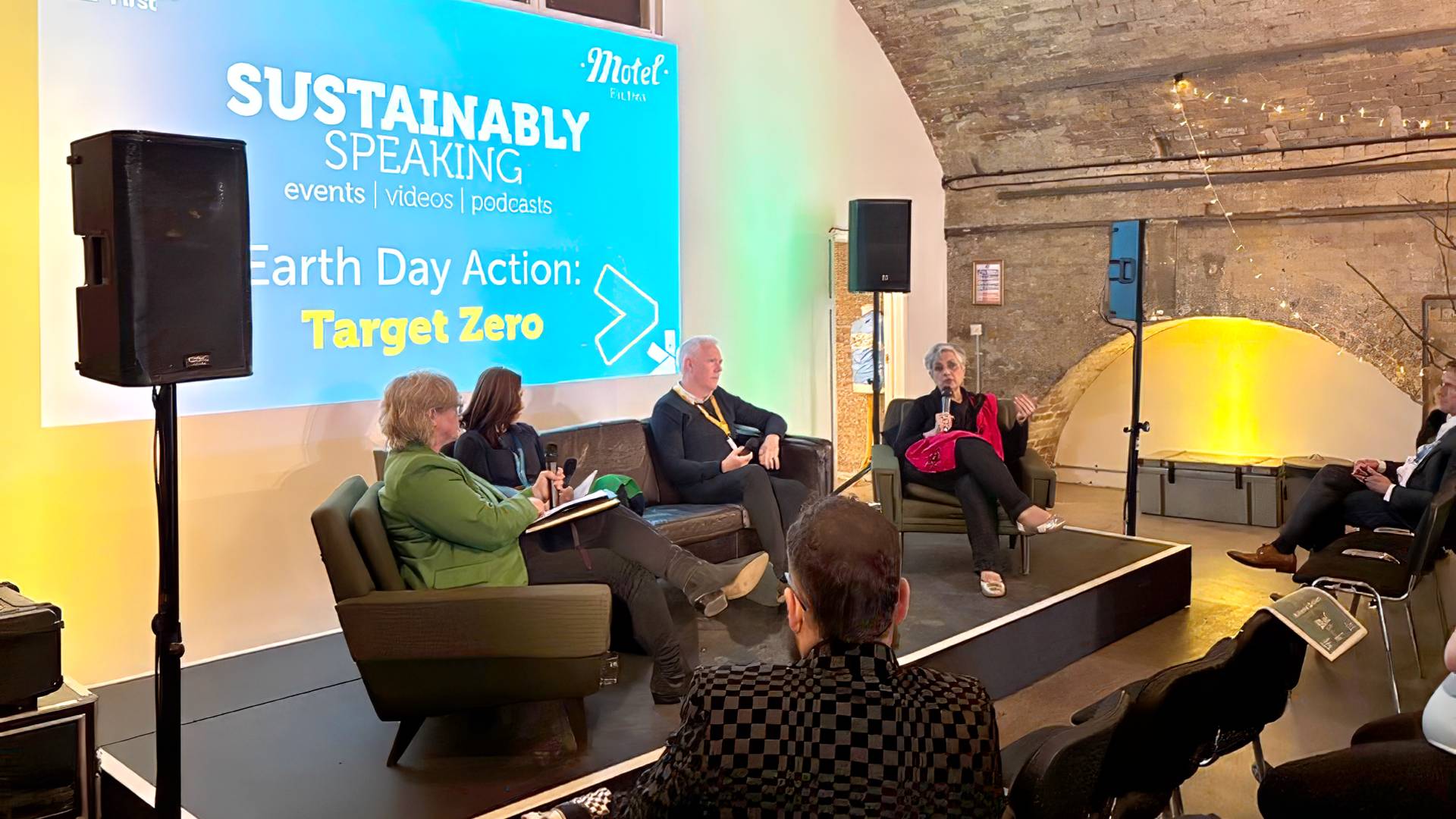
These challenges were a key theme raised by Nadra Ahmed CBE, Executive Chairman of the National Care Association, during Sustainable Energy First’s Sustainably Speaking Earth Day Action: Target Zero event.
Speaking as part of a panel discussion on the challenges facing the property and care sectors, Nadra highlighted the pressures facing care providers and why energy management cannot be separated from resident wellbeing.
Care settings can’t simply switch off
Energy efficiency is a priority across every sector, but the social care environment presents unique challenges.
Unlike offices, retail spaces or industrial facilities, care homes are continuously occupied. Residents often have complex health conditions, reduced mobility or increased sensitivity to temperature changes.
“You can walk into a care setting in the middle of the hottest summer and residents may still be sitting with blankets over their knees,” Nadra explained during the panel discussion.
Care providers also rely heavily on energy to power essential services and equipment, from lighting and heating to hoists, medical devices and kitchen facilities. Any disruption can have direct consequences for residents and staff alike.
As a result, many traditional energy-saving approaches simply aren’t appropriate.
Rising costs are creating additional pressure
The care sector is already facing significant financial challenges. As Nadra explained during the discussion:
“For us, energy resilience is mission critical… we face so many cost pressures from different angles that it’s becoming a buzz word. We’re seeing a workforce crisis, a funding crisis, the whole package. So for us, the most important thing is to try and make the savings you can.”
Labour costs continue to rise, providers face increasing regulatory requirements, and many organisations operate within extremely tight margins. Energy therefore represents one of the few areas where organisations can potentially reduce expenditure without compromising service delivery.
However, that requires a careful balancing act.
The challenge is finding opportunities to reduce costs and improve efficiency without compromising resident wellbeing.
This is particularly important for smaller independent providers, many of whom own and manage their own buildings.
According to Nadra, the NCA is seeing care providers increasingly seek ways to improve operational efficiency, but energy management has not traditionally been an area where organisations have sought specialist support. That is beginning to change:
“Our partnership with SE First is really valuable. We’re really delighted at National Care Association we’ve been able to support our members with energy and sustainability solutions, because they won’t have thought about it before, and now they will be thinking about it much more.”
Ageing buildings make the challenge harder
One of the biggest barriers facing the sector is the age and condition of many care facilities.
While new developments can be designed with energy efficiency in mind, a significant proportion of care services operate from older properties that have been adapted over time.
These buildings were often never designed to meet modern sustainability expectations.
Retrofitting can therefore be complex and expensive, particularly when buildings remain fully occupied throughout improvement works. Yet, the need for action is growing.
Glyn Whelan, Director of Sustainable Solutions at Sustainable Energy First, said:
“One of the biggest misconceptions is that improving energy performance always requires major capital investment. While larger retrofit projects certainly have a role to play, many organisations can achieve meaningful savings by understanding how their buildings are operating today, optimising existing systems and making better use of the data already available to them.”
“For care providers in particular, the priority is identifying measures that reduce energy waste without disrupting residents or compromising the quality of care being delivered.”
Resilience is becoming just as important as efficiency
For social care providers, energy resilience is increasingly moving up the agenda.
During the discussion, Nadra shared a recent example that illustrated how vulnerable some providers can be to energy-related disruption:
“I had the most horrendous call from one of our rural providers saying that all the oil that he bought had been siphoned overnight. Horrific, actually. And of course, the home requires that. It had been siphoned off, and they had to buy oil again at a greater price than they’d originally bought it at.”
The incident was a stark reminder of how closely energy resilience and continuity of care are linked.
Reflecting on this challenge, Glyn said:
“Resilience is becoming just as important as efficiency. Organisations need to understand not only how much energy they use, but how vulnerable they may be to supply disruptions and price volatility.”
“By assessing risk and planning ahead, providers can build greater resilience into their operations while also identifying opportunities to reduce costs and improve performance”
Recent assessments from the Climate Change Committee have also highlighted that health and social care services remain vulnerable to rising temperatures and more frequent heatwaves, reinforcing the need for long-term resilience planning across the sector.
Focusing on the opportunities that matter
While the challenges facing social care are significant, the panel discussion also highlighted a growing recognition that energy efficiency and good care do not need to compete with one another.
In many cases, the most effective interventions are the practical ones.
Glyn added:
“I’d recommend starting with the fundamentals. Understanding how a building is performing, ensuring equipment is operating efficiently and reviewing maintenance practices can often uncover significant opportunities before major investment is required.”
“For organisations operating under financial pressure, these types of improvements can deliver meaningful savings while supporting wider sustainability objectives.”
As Nadra noted:
“The most important thing is to make the savings that you can. The things that you can do.”
However, she was clear that efficiency must never come at the expense of residents:
“One thing we cannot and should not be compromising on is the delivery of the care that we provide.”
For a sector operating under intense financial and operational pressure, these improvements can make a meaningful difference.
The conversation at Sustainably Speaking reinforced an important point: as providers look to improve efficiency and reduce costs, care quality and resident wellbeing will continue to shape the decisions they make. Every decision must support the ultimate objective of delivering safe, high-quality care.
As Nadra reminded the audience:
“This is not a 9-to-5 job, it is 24/7. And you can’t leave a piece of paper on the desk and say, ‘I’ll deal with it tomorrow’, because it’s critical.”
For care providers, energy decisions are never just about kilowatt hours or cost savings. They are ultimately about maintaining safe, comfortable environments for the people who rely on those services every day.
If the content of this or any of our articles has interested you, please get in touch for a no-obligation chat with our industry-leading experts at Sustainable Energy First.