

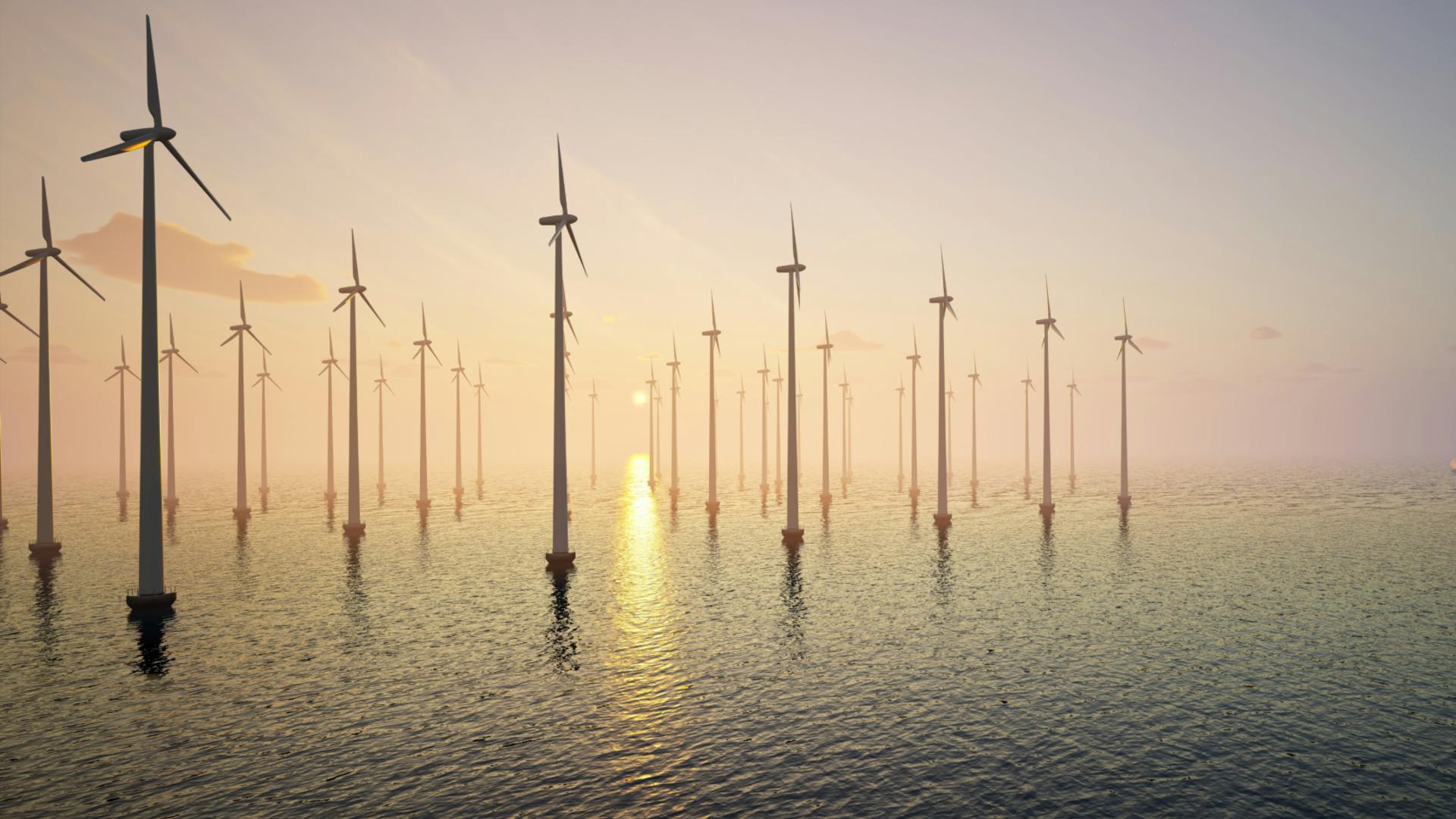

The UK government has secured 8.4 gigawatts (GW) of offshore wind capacity in its latest Contracts for Difference (CfD) auction, marking the largest single offshore wind procurement in Europe to date.
The auction, known as Allocation Round 7 (AR7), follows a difficult period for the offshore wind sector after no projects were awarded in Allocation Round 5 in 2023. According to the Department for Energy Security and Net Zero, the capacity awarded is expected to generate enough electricity annually to meet the equivalent consumption of around 12 million homes, although actual output will vary due to the intermittent nature of wind generation.
Lower than the cost of new gas
The average strike price for fixed-bottom offshore wind projects awarded in AR7 was £90.91 per megawatt hour (MWh) in 2026 prices, equivalent to £65.25/MWh in 2012 prices. The government said this compares with an estimated £147/MWh for the lifetime cost of building and operating a new gas-fired power station, based on the Levelised Cost of Energy (LCOE) metric.
Floating offshore wind projects were also awarded contracts, though at a significantly higher strike price of £216.46/MWh, reflecting the earlier stage of commercial development for the technology.
Investment and employment
The government estimates that the auction could unlock around £22 billion in private investment and support approximately 7,000 jobs across the UK supply chain.
Projects awarded contracts are located across England, Scotland and Wales, including:
- Dogger Bank South (off the Yorkshire coast)
- Norfolk Vanguard (East Anglia)
- Berwick Bank in the North Sea, the first new Scottish offshore wind project to secure a CfD since 2022
- Awel y Môr, the first Welsh offshore wind project to receive a contract in more than a decade
Floating wind projects awarded contracts include Erebus in the Celtic Sea and Pentland off the coast of Scotland.
Energy security and future demand
The auction takes place as electricity demand is expected to rise significantly over coming decades, driven by electric vehicles, heat pumps and industrial electrification. Government forecasts suggest total electricity demand could more than double by 2050.
Supporters of offshore wind argue that increasing domestic renewable generation reduces exposure to international fossil fuel markets, which have seen sharp price volatility in recent years. In 2025, wholesale gas prices rose by more than 15% in a single week following geopolitical tensions in the Middle East.
However, energy system experts continue to highlight the need for complementary investment in grid infrastructure, energy storage, flexible demand, and dispatchable low-carbon generation to ensure reliability as renewable capacity grows.
Industry response
Energy companies and industry groups broadly welcomed the AR7 outcome, describing it as a positive signal for long-term investment in the UK offshore wind market. Martin Pibworth, Chief Executive of SSE plc, said, “We are delighted Berwick Bank B has been successful in AR7 and has secured a CfD for 1.4GW of essential new low-carbon power for the UK at a competitive price for consumers. This milestone enables us to advance the project towards a final investment decision.”
Consumer and business groups also pointed to the potential for offshore wind to provide power at a stable and predictable price. Jennifer Beckwith, Senior Manager for Energy Transition at the CBI, said, “Against the backdrop of increasingly volatile global energy markets, securing the UK’s energy supply is a key national priority. These results mark a significant step on the journey towards achieving a more secure, resilient and cleaner energy mix for the years and decades ahead.”